Elastic Observability, built on open source
Store more, spend less, and troubleshoot faster with agentic AI.

Manifesto
Live logs and prosper: Fixing a fundamental flaw in modern observability

Fix problems in seconds, not hours
Use AI to get answers, not just alerts.
Go deeper into Elastic Observability
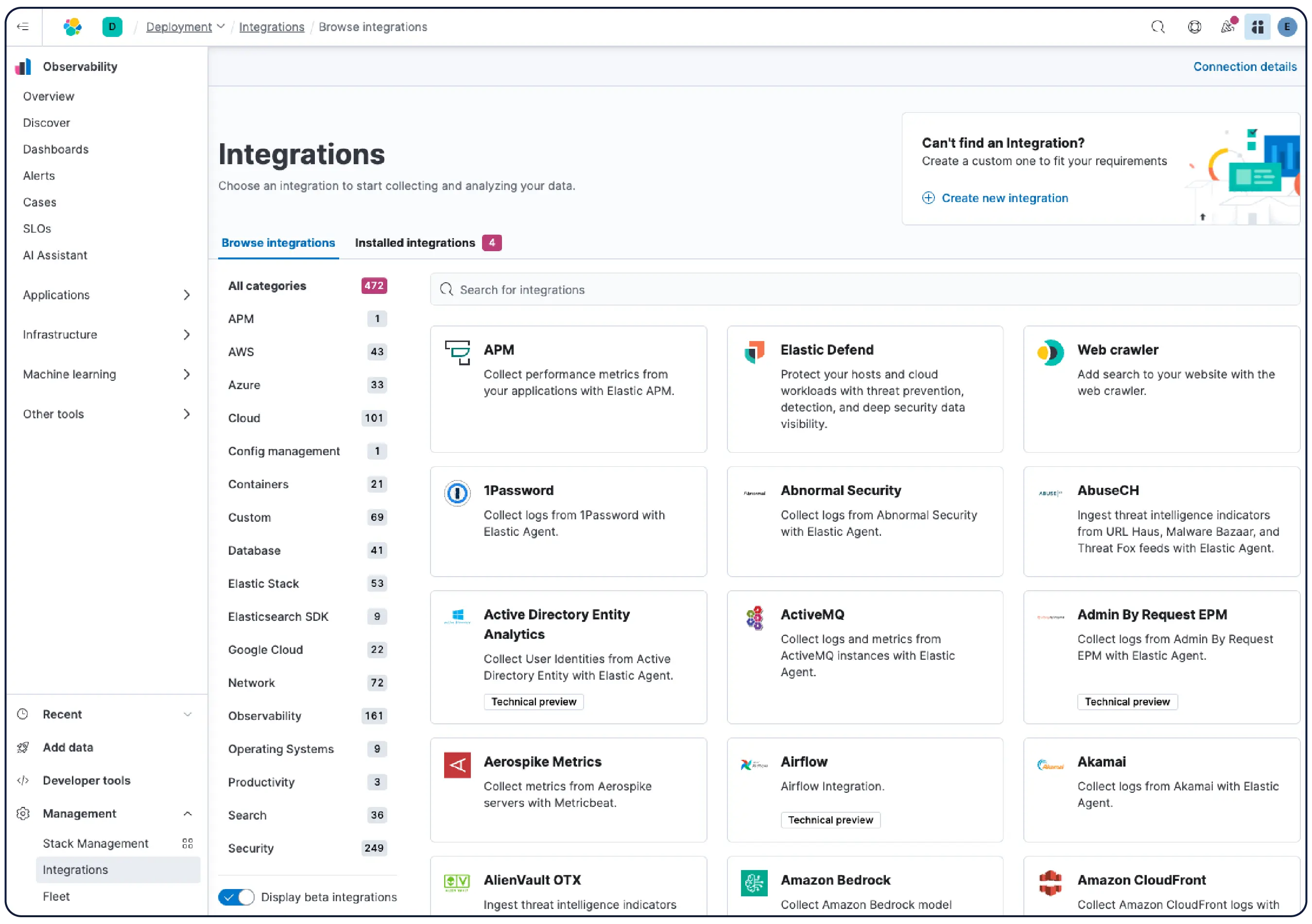
From ingest to insight. Discover the agentic AI-driven features that make observability easy.


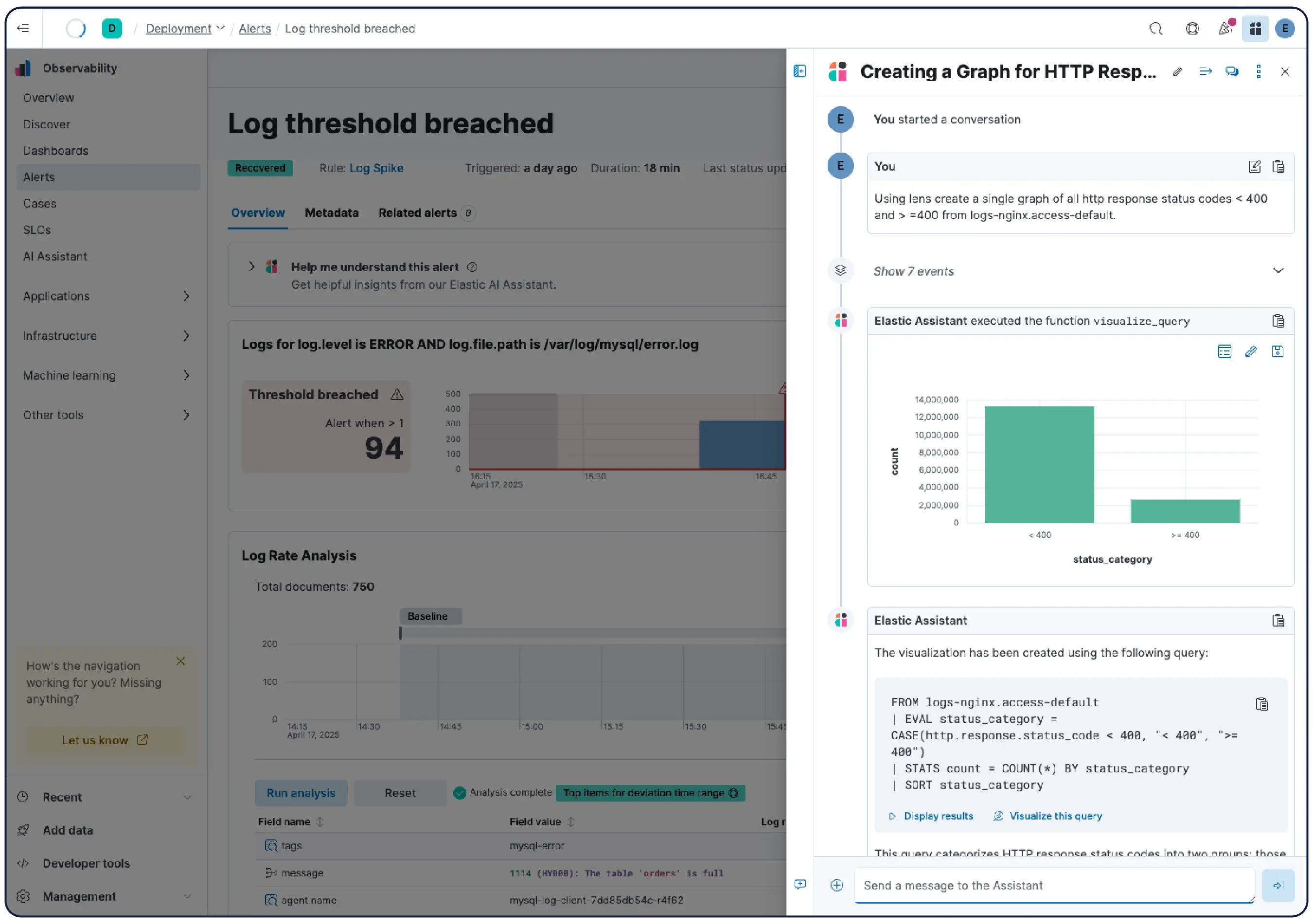
From data to answers. No digging required.
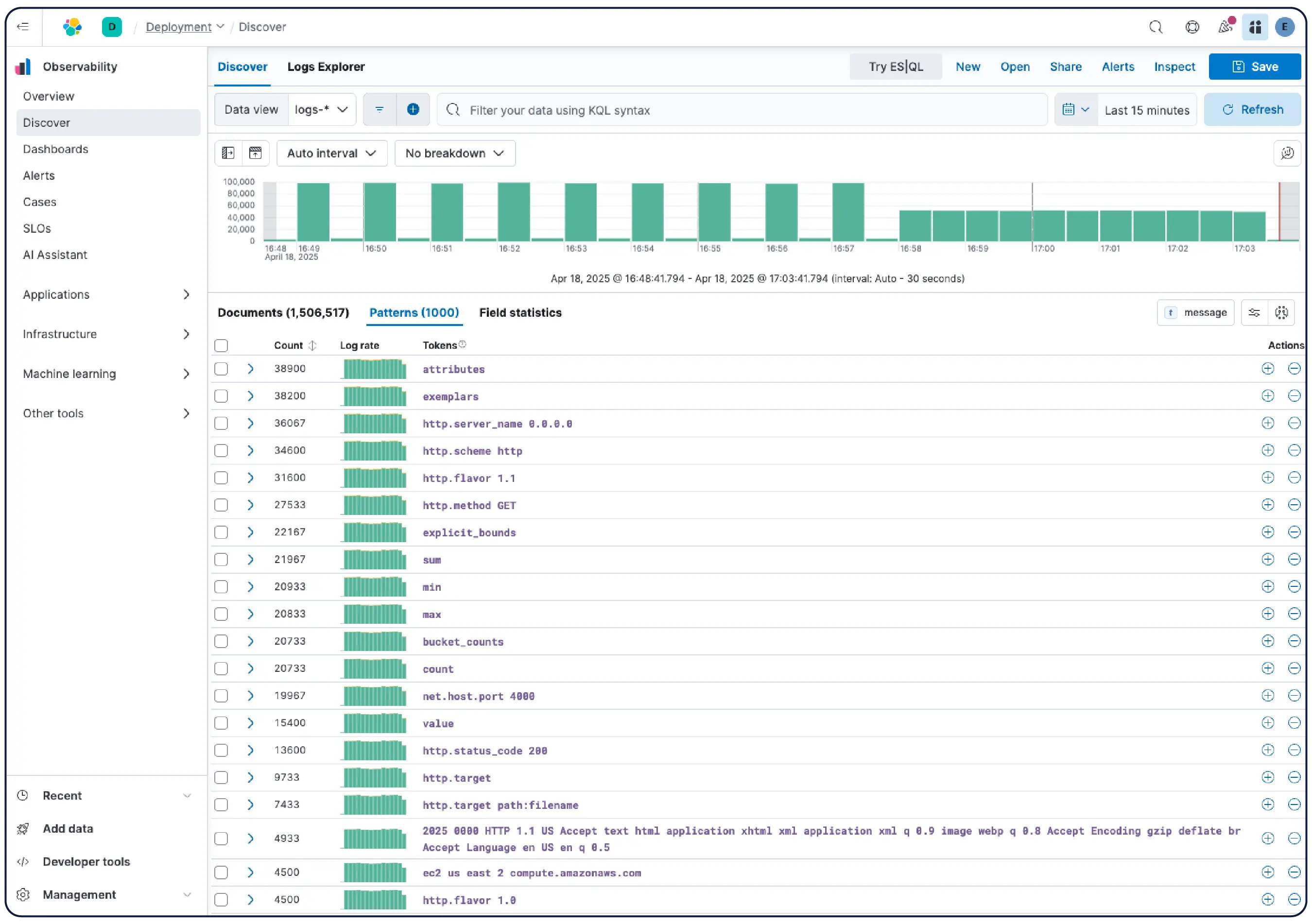
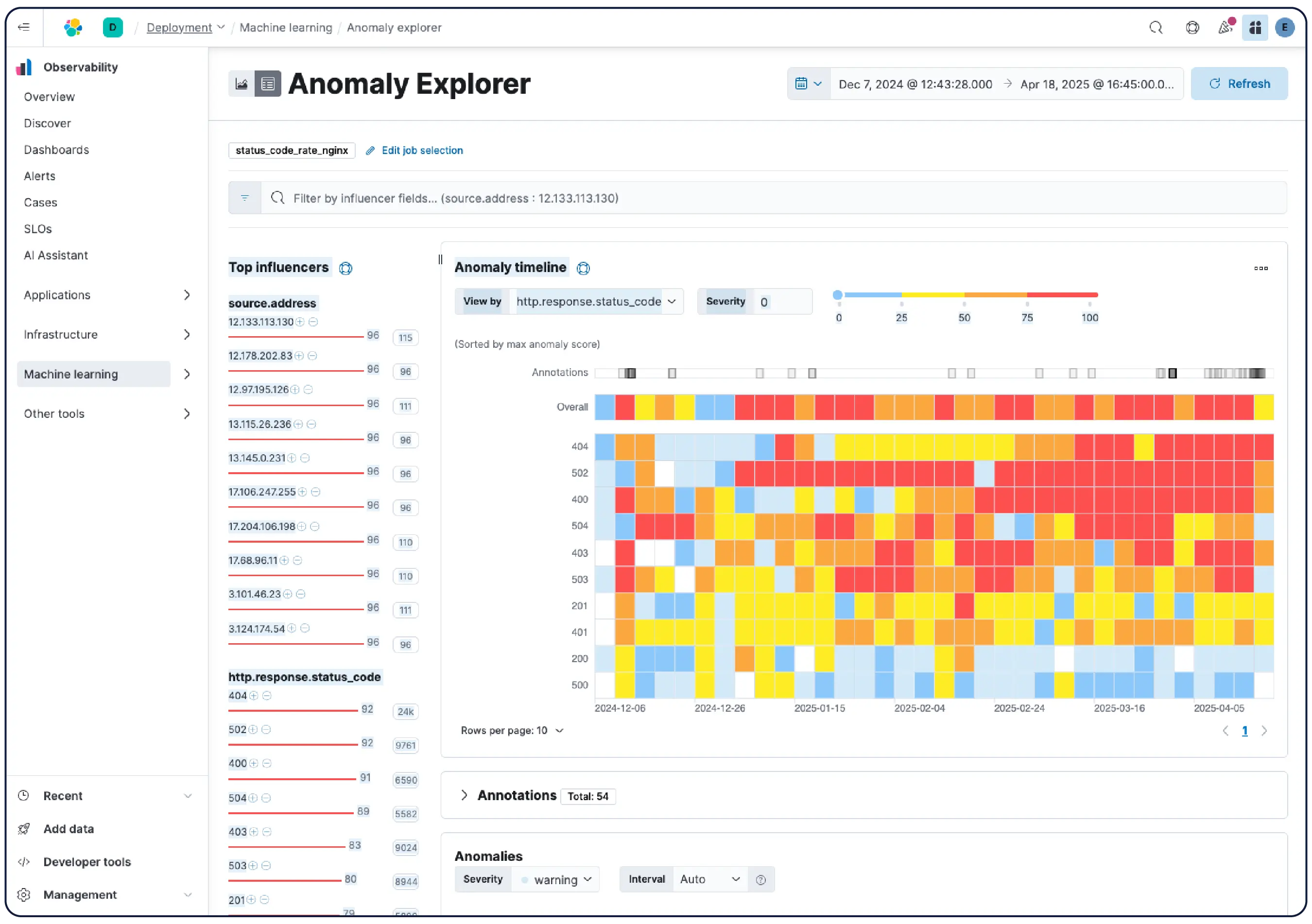
Fixing incidents is one thing. Preventing them is another. Teams need real-time analytics, anomaly detection, and efficient telemetry storage in one place. Elastic brings it all together.
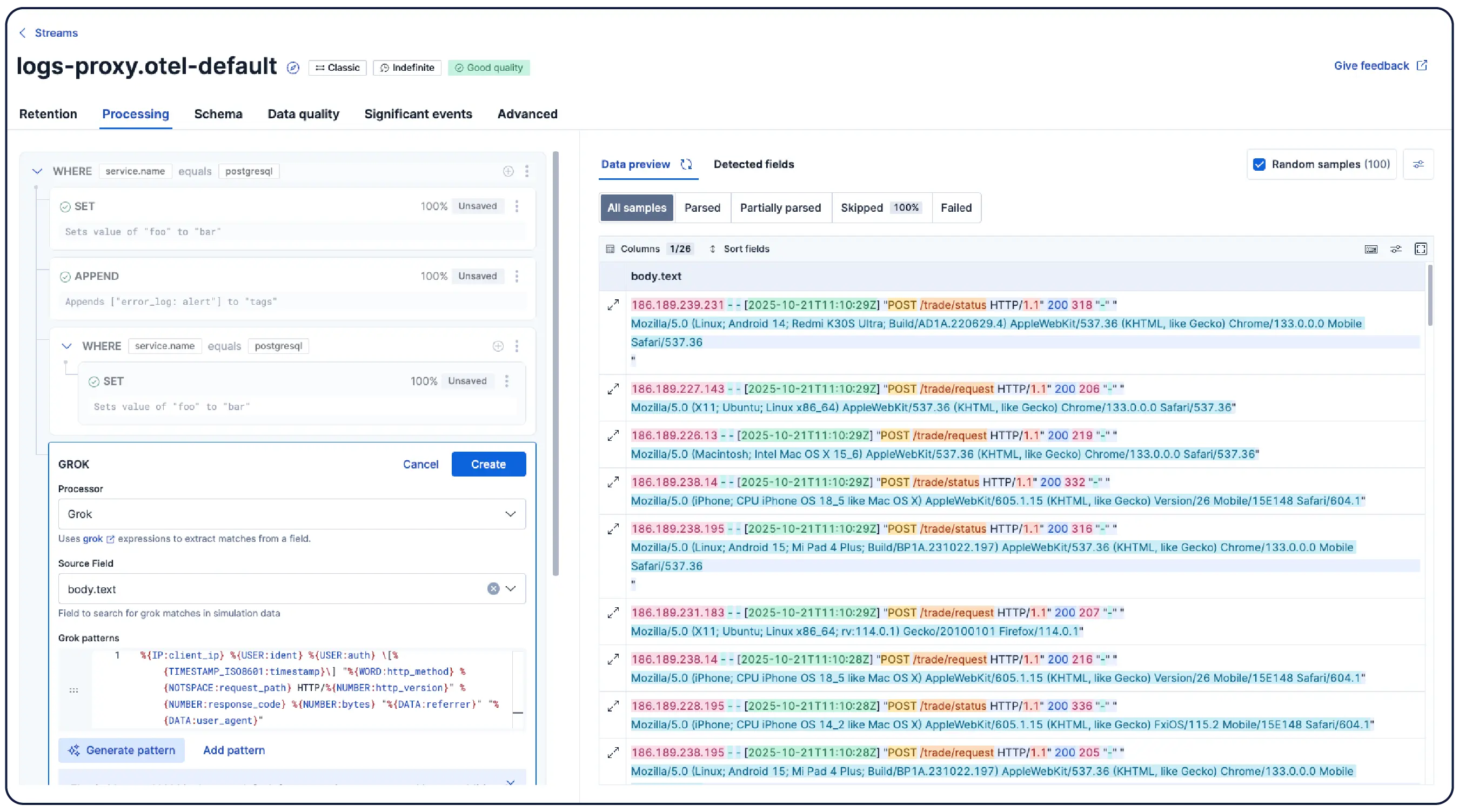
Automatically organize data into logical streams, applying parsing, partitioning, field extraction, and lifecycle policies with minimal manual setup. Significant Events automatically highlights "features" to watch.
Scale and save


Open source. AI powered. Limitless.


A high quality neighborhood
Teams thrive and scale with end-to-end observability.
Customer spotlight

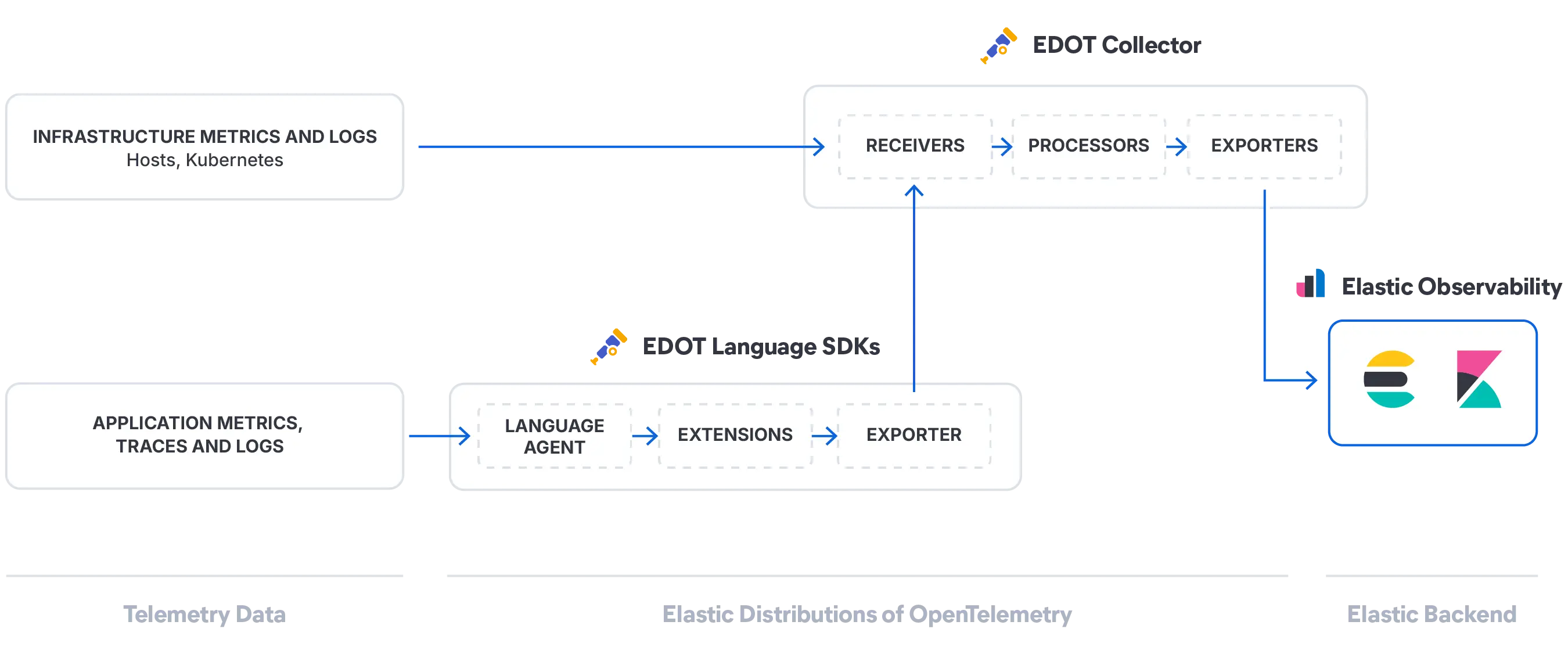
Wells Fargo observes through a single pane of glass — including metrics, events, logs, application traces, and extensions to minimize the log fields ingested by 60%.
Customer spotlight

Comcast transforms customer experiences by providing a more strategic, partnership-based approach.
Customer spotlight

Equinox boosts its cloud infrastructure health with Elastic Observability and reduces observability operational expenditure by 80%.
Join the chat
Connect to Elastic's global community and participate in open conversations and collaboration.


.jpg)
Frequently asked questions
What is full-stack observability?
What is full-stack observability?
Full-stack observability refers to the ability of an observability solution to monitor the entire application stack — from the end user to the application code and infrastructure. A full-stack observability solution typically consists of several capabilities, including, log monitoring and analytics, cloud and infrastructure monitoring, application performance monitoring, digital experience monitoring, continuous profiling, and AIOps. Take our self-assessment to understand how you stack up on your maturity journey toward a unified full-stack observability platform, so you can analyze telemetry holistically and achieve faster mean time to resolution.
What are the benefits of full-stack observability?
What are the benefits of full-stack observability?
Full-stack observability enables organizations to achieve business and operational excellence. By implementing full-stack observability, SRE teams break down silos and can proactively detect and resolve issues faster with contextual alerts and effective cross-functional collaboration. Businesses can deliver on SLAs and improve time to market, operational efficiency, and customer satisfaction. Learn more about the benefits of full-stack observability.
Why are businesses switching from Splunk to Elastic Observability?
Why are businesses switching from Splunk to Elastic Observability?
Businesses everywhere are facing a challenging environment: increased cost pressures coupled with high volumes of data generated by complex, distributed, cloud-native environments. As a result, teams need smarter analytics, with data access and retention across all their data — instantly and from anywhere — in order to resolve issues, make decisions, and ensure resiliency. Many companies that have adopted Splunk Enterprise have a choice to make, since Splunk offers fragmented observability with Splunk Enterprise, Splunk Cloud, and Splunk Observability with different pricing models. By contrast, Elastic offers a fast, simple solution that positions companies for the future.
What is the difference between observability and monitoring?
What is the difference between observability and monitoring?
Observability can be thought of as the evolution of monitoring for modern applications. Fundamentally, it is the ability of applications and infrastructure to expose their internal state through actionable logs, published metrics, and distributed traces. As an approach, observability is better suited than traditional monitoring to manage the complexity and scale of cloud-native environments through the collection, transformation, correlation, analysis, and visualization of these signals. Observability continues to evolve with new trends and technologies.
How do you implement observability?
How do you implement observability?
When implementing observability, think in terms of technical and operational readiness. Make sure you have the people and processes in place to support an observability function. Determine the data you want to collect initially. If you are just starting out, we recommend beginning with a single application as a pilot and focusing on one type of signal (e.g., logs) before moving on to metrics and traces. Plan for the future by choosing an observability solution that can grow with you. Ready to begin? See how Elastic’s internal SRE organization has implemented observability at scale.
What is Search AI Lake?
What is Search AI Lake?
Elastic's Search AI Lake is optimized for real-time, low-latency applications, making it an ideal architecture for your AI-driven future. It revolutionizes data lakes by bringing together the expansive storage capacity of a data lake with low-latency querying and the powerful search and AI relevance capabilities of Elasticsearch. Search AI Lake powers a new Elastic Cloud serverless deployment — removing all operational overhead so your teams can start innovating.